An Interview with Our Founder
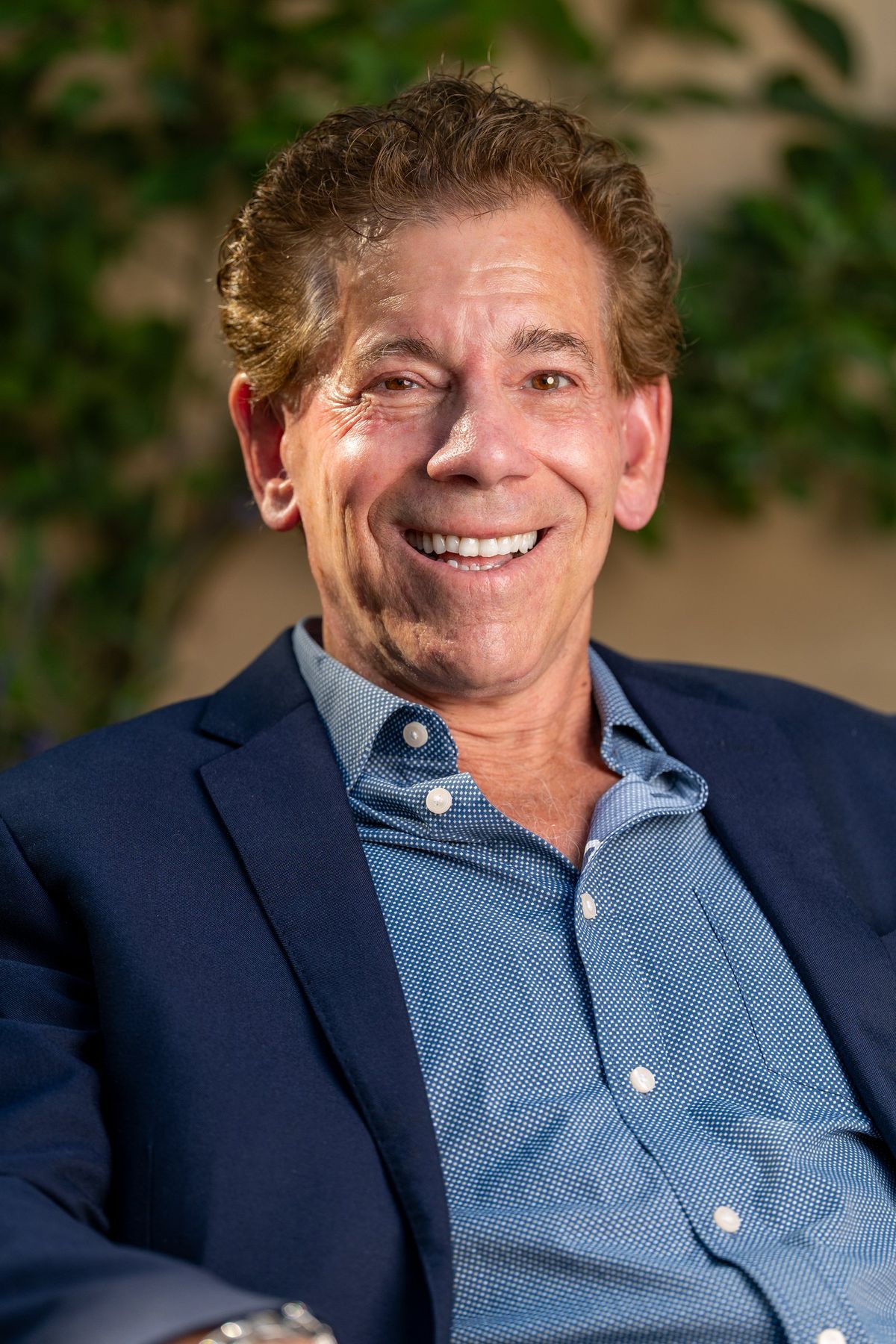
Live in the Happy Bubble Foundation CEO and Chairman Bruce Etkin discusses what inspired him to establish access to tools for happier, more intentional living.
When you sat down to write The Happy Bubble, did you know you wanted to launch a nonprofit in tandem with its publishing or is that something that came up during the process?
When I started writing The Happy Bubble, I knew I wanted it to be bigger than an advice book. I have been very blessed in my life, so if I have an extraordinary experience, I always think about how I can make it accessible for other people. In this case, I had a lot of people commenting on my mood and my optimism and I realized I could share my method for it with them and with anyone interested in better managing stress in their lives.
So in that sense, writing the book was never compartmentalized. I was always thinking of it like the source material for something bigger, something that could spawn a system of helping people — with the method as the starting point, and then a curriculum and a foundation where people could continue to access resources derived from the book’s publication.
Building is also in my nature. As a developer, that’s what I’ve spent most of my life doing. So with the book, I was immediately asking myself: After I write this all out, how can I turn the method itself into something that can grow and evolve with the times? What kind of an organization can scale the lessons of The Happy Bubble and help as many people as possible protect their emotional well-being regardless of what’s going on in their life and in the world?
The mission of the foundation is about empowering people to pursue and enhance their everyday happiness. What do you mean by the phrase “everyday happiness?”
Look, I think to some degree we’re all conditioned to think of happiness as this big, expansive apex. Like it’s this feeling that we are supposed to chase and once we achieve it, we will have this tremendous inner peace and relief. In theory, that makes sense. We learn to live and process our emotions the way we’ve learned to digest stories. We believe in finding our own happy ending and we know that if it’s right, we’ll just feel it and everything will click? But life isn’t linear in most respects and this big, overarching plan is not the finite experience most people have with happiness.
Happiness is something we have to nurture and work at. It’s a habit. I believe it’s a habit cultivated through mindful, everyday choices. It’s true that achieving a singular goal or reaching a major milestone can bring us joy, but what I’m focused on is how the average person can feel happiness every single day — in spite of the circumstances or distractions around them. This means redefining happiness with a fresh perspective on what’s going right in our lives and what we can be grateful for today.
The arrival fallacy is a completely normal part of the way we operate as human beings, but it’s also something a lot of academics and motivational writers and speakers warn against. We think if we do this, we will feel this way. Or once we get to this point, well then for sure we’re going to have a sense of satisfaction. But the problem with that is there’s only accounting for A and Z, not how you treat yourself and your quality of life during all the days in between. Tools for managing your well-being on a daily basis are going to be the difference between the kind of optimism that’s sporadic and somewhat unreliable and the kind that you can nurture and sustain.
What would you say to someone who questions that mission and who thinks that The Happy Bubble sounds like an oversimplification? That life is complex and not everyone has the same advantages or capacity to just implement a method and move on with their day?
I would say that their skepticism is reasonable. We all come from different backgrounds, advantages, disadvantages, privileges, etc. I think that a person reading this who is in a life or death job for example may feel the stakes of their occupation aren’t comparable to someone reading it who works in a lower stress environment. They might ask: How can this work for my life and that person’s life? That’s a fair question.
We aren’t all going to navigate stress the same way, but what I can confidently say is that as someone with an engineering background (a background I used to craft the four steps of The Happy Bubble method), my focus when creating this was to make it as universally accessible as possible. And when I say that I mean I want to ensure people from all walks of life have access to the method and to its ongoing ecosystem of educational materials, but I also want the method itself to be able to be integrated by anyone in a way they are most comfortable with.
Stakes may vary for people across the spectrum, but the throughline is in stressors. There is a common problem of stress management and losing control of our time, our days, and our overall quality of life. We all get stuck from time to time and experience it in our personal and professional capacities.
So I did what any engineer has done — I defined that problem, designed a solution, built the solution, and tested and adjusted it accordingly. The method accounts for a diverse range of variables and circumstances out there among readers, but the core solution of enabling people to focus on themselves amid the information overload coming from the people and the world around them is something that applies across the board.
So what would I say to these skeptics? I’d say that they’re correct to believe that life is complex. I’d also encourage them to understand that complex problems can be tackled with simple solutions. And I’d add that it’s this practicality that can make all the difference in how we develop more meaningful, intentional day-to-day living.
What are some of your goals for the Live in the Happy Bubble Foundation?
Not unlike the four steps of the method in the book, I have four topline goals for the foundation itself.
Creating access. Whether it’s access to food, recreational activities, art, culture, and more, lowering barriers to experience is the common denominator in everything I do with my philanthropic work and community initiatives. The Live in the Happy Bubble Foundation is no exception, as it is about establishing access to tools for happier, more intentional living.
Passing it on. Reading the book and learning the method is just the beginning. "Pass the Bubble" means readers and partners not just adopting the method and using subsequent tools in their own lives, but are concurrently ensuring others can learn from and experience them as well.
Building bigger. The Happy Bubble is bigger than any one person. It should start, but not end with me and my story. I want to seed this work and put it in the trusting hands of others, so they can carry the message onward and spread happiness with tangible, practical tools and experiences for improving everyday happiness for generations to come.
Scale from Home. Happiness is a universal language, which is why it demands universal access. In business, we talk about “thinking globally and acting locally” as a viable strategy for scaling change and that applies here as well. I want to see visible results in communities close to my heart, including Aspen, Denver, Boulder, and Moab. Then the foundation will expand its work to additional regional work, national partnerships, and even international initiatives.
Bruce Etkin
In his debut book, The Happy Bubble: How to Reclaim Your Day, Restore Your Peace, and Reimagine Your Life, philanthropist and real estate developer Bruce Etkin channels his personal philosophy into a transformational guide for happier, more intentional living.